
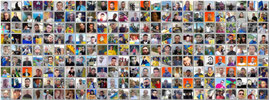
Algeria: Justice for the Larva-Nat-Iraten Detainees
The Criminal Court of the Dar El-Beïda court, near Algiers, will re-examine the cases of the so-called Larva-Nat-Iraten detainees on March 1, 2026.
This new trial comes after the Algerian Supreme Court overturned, in November 2024, the convictions handed down in 2023 by the Dar El-Beïda Court of Appeal. The latter had sentenced 38 defendants to death, 29 others to prison terms ranging from 3 to 20 years, while 27 defendants were acquitted.
In rendering its judgments, the Algerian justice system relied on numerous articles of the penal code, including the notorious Article 87 bis concerning "terrorism and undermining national unity." The defendants are being prosecuted, in particular, for "terrorist and subversive acts undermining state security, national unity, and the stability of institutions; conspiracy and attacks on the integrity of the national territory; arson of forests; and premeditated murder."
During the first two trials (trial and appeal), the defendants, their families, their lawyers, human rights NGOs, civil society organizations, and even some political parties all denounced unfair trials marred by serious irregularities such as:
- lack of irrefutable physical evidence,
- allegations of confessions obtained under torture,
- judgments based on a broad and contested application of the anti-terrorism law (particularly Article 87 bis of the penal code),
- prohibition against the defendants speaking in the Amazigh (Kabyle) language during hearings,
- threats against lawyers,
- political accusations, notably for membership in the Movement for the Self-Determination of Kabylia (MAK).
Amnesty International believes that:
• The trials were unfair: The trials of the defendants were marred by serious violations of international fair trial standards. Amnesty International notes in particular the lack of clear evidence, the failure to recognize the presumption of innocence, the use of confessions obtained under torture, and prosecutions motivated by political opinions or alleged links with the MAK (Movement for the Self-Determination of Kabylia).
• There has been political criminalization: Several people convicted were sentenced because of their perceived political affiliations and not on the basis of concrete evidence of criminal acts.
• These trials are taking place within a broader context of repression, with arbitrary arrests and harsh sentences for peaceful expression or protest.
This new trial, in which the defendants will be retried, is crucial. The defendants, their families, their lawyers, NGOs, and all of Kabylia are hoping this time for a truly fair trial and judgments that comply with the rule of law and the international conventions ratified by Algeria. Because until now, the Algerian justice system has largely failed.
The 2024 annulment of the convictions on appeal by the Algerian Supreme Court is a first victory for law and justice. We sincerely hope that the judges of the Dar-El-Beida court will seize the opportunity presented by these new trials to uphold justice and refuse to convict innocent people.
The Congrès Mondial Amazigh / Amazigh World Congress expresses its full support for all those arbitrarily imprisoned in Algeria because they are Amazigh, Kabyle, Chaoui, or At-Mzab, or for their opinions, their associative activities, or their public expression. The use of anti-terrorism legislation to criminalize legitimate demands expressed peacefully is absolutely unacceptable. The CMA urges regional and international bodies to demand that Algeria immediately cease its anti-Amazigh, and particularly anti-Kabyle, policies.
Paris, 16.02.2976 – 28.02.2026
The Board of CMA.